

Well Child Visits in Beverly Hills
Did you know that regular well-child visits are one of the most important things you can do to keep your child healthy? Preventative care promotes healthy growth and development. Well child visits also provide you with the opportunity to discuss any questions or concerns you may have about your child’s health or development.
Both parents are invited and encouraged to be a part of every well baby visit!
In addition to providing routine physical exams and vaccinations, we also screen every child for developmental milestones and screen our adolescent/teen patients for depression.

Schedule of Visits
2-5 Days
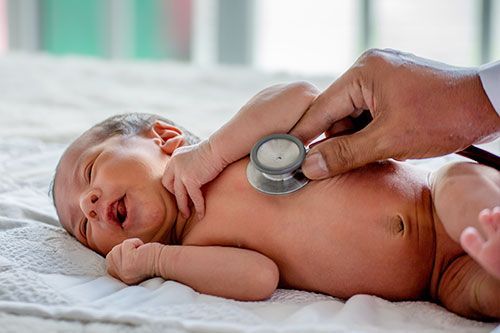
Congratulations! Your baby is finally here. Newborns are wonderful, but exhausting! Having friends or family around to provide extra help and support can be very helpful. Make sure all visitors wash their hands well. Your baby’s first visit to our office takes place during his or her first week of life, usually 1-2 days after you are discharged from the hospital.
We do a lot at this visit, including:
- Check your baby’s weight.
- Full physical exam.
- Monitor for signs of jaundice.
- Check to see how your baby is feeding.
- Answer questions about your new baby.
Tests/Screens/Assessments:
- Follow-up on Newborn Metabolic Screen done in hospital

7-10 Days
We do a lot at this visit, including:
- Check your baby’s weight.
- Full physical exam.
- Monitor for signs of jaundice.
- Check to see how your baby is feeding.
- Answer questions about your new baby.
2 Week Visit
The 2 Week Visit (sooner if you have concerns!) is a time to talk about how your family is acclimating to the newest addition. Feeding, bowel habits and sleeping are common topics. If you are breastfeeding, you will have the opportunity to meet with one of our Lactation Consultants for personalized breastfeeding assistance. Babies usually lose weight right after birth.
By 2 weeks of age, your baby will likely have regained his or her birth weight. Please remember that it is important to always put your baby to sleep on his or her back in a flat, firm and separate sleep space to reduce the risk of SIDS. As always, we are here to answer questions and offer anticipatory guidance.
We do a lot at this visit, including:
- Measure your baby’s weight and record on a growth curve.
- Full physical exam.
- Remind you to give your baby a daily supplement of 400 IU of vitamin D drops.
Immunizations:
- None
Tests/Screens/Assessments:
- None
1 Month Visit
Families are usually settling in some by this visit. Feeding, sleeping and bowel habits are sometimes a concern. At this visit we will track your baby's growth and development and answer any questions. Your baby may be starting to smile now and that helps a lot!
Immunizations:
Tests/Screens/Assessments:
- Post Partum Depression Assessment
- TB Surveillance

2 Month Visit
Many babies seem more fussy or colicky at this age. Be patient. Colicky babies eventually outgrow their crying phase. Keeping your baby safe is the most important thing you can do. Even if you feel frustrated, handle your baby gently and reach out for help to friends, relatives or your pediatrician if the crying is getting to be too much. If you need a break and no one is available to help you, place your baby on his/her back gently in a safe space, such as a crib or bassinet and take a few minutes to calm down.
We do a lot at this visit, including:
- Measure your baby’s weight, length and head size and record on a growth curve.
- Full physical exam.
- Provide your baby’s first set of immunizations. Immunizations are safe, effective and keep your child and our community healthy. During this visit, you will be able to discuss any questions you may have about immunizations.
- Screen for post-partum depression.
Immunizations:
Tests/Screens/Assessments:
- Post Partum Depression Assessment

3-4 Month Visit
Your baby is becoming more active and verbal. Be careful not to leave your baby unattended, especially on a bed, couch or counter. They move faster than you think!
Babies need only breast milk or iron fortified-formula for the first 4-6 months of life. We will talk at this appointment about the appropriate time to introduce solid foods and what foods to introduce first.
We do a lot at this visit, including:
- Measure your baby’s weight, length and head size and record on a growth curve.
- Perform a full physical exam, discuss growth and development, and answer your questions.
- Provide your baby’s immunizations.
- Discuss when to start feeding your baby solid foods.
- Screen for post-partum depression.
Immunizations:
Tests/Screens/Assessments:
- Post Partum Depression Assessment

5-7 Month Visit
Your baby will begin to move more. Now is the time to start baby-proofing your house - if you haven't already done so. You should move the mattress in your baby's crib down to the lowest level.
We do a lot at this visit, including:
- Measure your baby’s weight, length and head size and record on a growth curve.
- Perform a full physical exam, discuss growth and development and answer your questions.
- Provide your baby’s immunizations.
- Screen for post-partum depression.
Immunizations:
- DTaP#3
- HIB#3
- HepB#3
- PCV#3
- Rotavirus#3
- Influenza vaccine (during flu season)
Tests/Screens/Assessments:
- Post Partum Depression Screening
- Developmental Screening Questionnaire

8-9 Month Visit
Your baby may be starting to crawl, pulling to a stand and cruising on furniture. Babies will want to touch everything - this is how they learn. This is a messy time! Have fun and be patient.
We do a lot at this visit, including:
- Measure your baby’s weight, length and head size and record on a growth curve.
- Perform a full physical exam, discuss growth and development and answer your questions.
- Screen for anemia
Immunizations:
- Influenza vaccine (during flu season)
Tests/Screens/Assessments:
- Developmental Screening Questionnaire
- Hemoglobin Test

1 Year Visit
Age one year is a very exciting for both you and your child! One year olds are very curious, playful and active and also starting to "test the limits." For many children, it is the beginning of their transition from being babies to toddlerhood.
We do a lot at this visit, including:
- Measure your baby’s weight, length and head size and record on a growth curve.
- Perform a full physical exam, discuss growth and development and answer your questions.
- Provide your baby’s immunizations.
- Screen your baby for vision abnormalities with our ocular photoscreen device.
Immunizations:
- Hepatitis A
- MMR
- Varicella
- Influenza vaccine (during flu season)
Tests/Screens/Assessments:
- Vision Photoscreen
- Developmental Screening Questionnaire

15 Month Visit
Age 15 months is a time of great exploration. Toddlers are naturally curious and interested in everything....safe and unsafe!
Your child may be able to climb and run, so be sure to safety proof your home.
Poison control is available 24 hours a day: 1-800-222-1222 - keep this number handy in your cell phone and on your refrigerator.
We do a lot at this visit, including:
- Measure your baby’s weight, length and head size and record on a growth curve.
- Perform a full physical exam, discuss growth and development and answer your questions.
- Provide your baby’s immunizations.
Immunizations:
- DTaP
- HIB
- PCV
- Influenza vaccine (during flu season)
Tests/Screens/Assessments:
- Developmental Screening Questionnaire

18-21 Month Visit
At 18 and 21 months, your child understands much more than he or she can say in words. Use words to describe your child’s actions and gestures. Read and sing to your child. When reading, use simple words to talk about the pictures. Toddlers often run and need the space and time to run around...get your sneakers on and be ready to keep up with your toddler!
We do a lot at this visit, including:
- Measure your child’s weight, length and head size and record on a growth curve.
- Perform a full physical exam, discuss growth and development and answer your questions
- Provide your baby’s immunizations.
Immunizations:
- HepA#2
- Influenza vaccine (during flu season)
Tests/Screens/Assessments:
- Developmental Screening Questionnaire
- MCHAT Questionnaire

2 Year Visit
At age 2, your child may go from trying to be independent to clinging to you; this is normal. It is better for toddlers to play than to watch TV. Even having television playing in the background interrupts healthy toddler play - background music is a better choice.
We do a lot at this visit, including:
- Measure your child’s weight and height and record on a growth curve.
- Perform a full physical exam, discuss growth and development and answer your questions.
- Most of our patients do not have immunizations due at this visit. Your child may need immunizations if they are behind on their shots.
- Screen your child for vision abnormalities with our ocular photoscreen device.
Immunizations:
- Flu vaccine (during flu season)
Tests/Screens/Assessments:
- Developmental Screening Questionnaire
- MCHAT Questionnaire
- Vision Photoscreen

2 1/2 Year Visit
Your baby is not really a baby anymore. They are firmly in the toddler years. One moment they seem so big and the next still very small. This is the "do-it-myself time."
We do a lot at this visit, including:
- Measure your child’s weight and height and record on a growth curve
- Perform a full physical exam, discuss growth and development, and answer your questions.
- Most of our patients do not have immunizations due at this visit.
Immunizations:
- Flu vaccine (during flu season)
Tests/Screens/Assessments:
- Developmental Screening Questionnaire

3 and 3 1/2 Year Visits
Your child will likely be moving into a world of make believe that they create with their imagination. At age 3, children also start to engage other children their age in play.
We do a lot at this visit, including:
- Measure your child’s weight, height and body mass index and record on a growth curve.
- Perform a full physical exam, discuss growth and development, and answer your questions.
- Most of our patients do not have immunizations due at this visit. Your child may need immunizations if they are behind on their shots or during flu season.
- Screen your child for vision abnormalities with our ocular photoscreen device.
Immunizations:
- Flu vaccine (during flu season)
Tests/Screens/Assessments:
- Developmental Screening Questionnaire
- Vision Photoscreen

4 Year Visit
Four year olds often like to sing, dance and act. They like to tell "tall tales" and make up stories. Enjoy these fun moments with your little one! Parents should continue to help with brushing teeth even though your child will want to do it all by themselves.
We do a lot at this visit, including:
- Measure your child’s weight, height and body mass index and record on a growth curve.
- Perform a full physical exam, discuss growth and development, and answer your questions
- Provide your child's immunizations.
Immunizations:
(given in combination vaccines-- only two injections)
- MMR#2
- VAR#2
- DTaP#5
- IPV#4
- Flu vaccine (during flu season)
Tests/Screens/Assessments:
- Developmental Screening Questionnaire
- Vision Testing
- Urinalysis

5 Year Visit
At this age, your child needs more independence. However, you need to set clear limits. A regular bedtime and consistent bedtime routine are important. Be a great role model. Show an interest in what they are learning.
We do a lot at this visit, including:
- Measure your child’s weight, height and body mass index and record on a growth curve.
- Perform a full physical exam, discuss growth and development, and answer your questions
- Screen your child's hearing and vision.
- Check your child's blood pressure
Immunizations:
- Flu vaccine (during flu season)
Tests/Screens/Assessments:
- Developmental Screening Questionnaire
- Vision Testing
- Hearing Testing
- Blood Pressure
- Urinalysis

6 Year Visit
Encourage good learning by helping your child organize a distraction-free time to do homework and ensuring around eleven hours of sleep each night. Encourage literacy by reading to/with your child regularly. Give your child some age-appropriate household responsabilities. Teach your child what to do if there is a fire and have practice fire drills.
We do a lot at this visit, including:
- Measure your child’s weight, height and body mass index and record on a growth curve.
- Perform a full physical exam, discuss growth and development, and answer your questions
- Screen your child's hearing and vision.
- Check your child's blood pressure
Immunizations:
- Flu vaccine (during flu season)
Tests/Screens/Assessments:
- Developmental Screening Questionnaire
- Vision Testing
- Hearing Testing
- Blood Pressure
- Urinalysis

7 Year Visit
Continue to encourage good nutrition and exercise for your child. You can teach your child what different foods do for the body (example: carrots are good for vision). You and your family are building good health habits for a lifetime!
We do a lot at this visit, including:
- Measure your child’s weight, height and body mass index and record on a growth curve.
- Perform a full physical exam, discuss growth and development, and answer your questions.
- Discuss exercise and nutrition.
- Screen your child's hearing and vision.
- Check your child's blood pressure
Immunizations:
- Flu vaccine (during flu season)
Tests/Screens/Assessments:
- Developmental Screening Questionnaire
- Vision Surveillance
- Hearing Surveillance
- Blood Pressure
- Urinalysis

8 Year Visit
Positive self-image is important as your child matures. Empower them to feel good about themselves and their interactions with others by praising effort more than the outcome.
We do a lot at this visit, including:
- Measure your child’s weight, height and body mass index and record on a growth curve
- Perform a full physical exam, discuss growth and development, and answer your questions
- Measure your child’s blood pressure
- Screen your child's vision and hearing
- Review your child’s school performance and development
- Discuss involvement in activities
- Discuss exercise and nutrition
Immunizations:
- Flu vaccine (during flu season)
Tests/Screens/Assessments:
- Developmental Screening Questionnaire
- Vision Testing
- Hearing Testing
- Blood Pressure
- Urinalysis

9 Year Visit
Your child be is becoming more responsible and will be able to take on more tasks such as helping with meal preparation. Your child may also start reading independently for pleasure.
We do a lot at this visit, including:
- Measure your child’s weight, height and body mass index and record on a growth curve.
- Perform a full physical exam, discuss growth and development, and answer your questions
- Measure your child’s blood pressure
- Screen your child's vision and hearing
- Review your child’s school performance and development.
- Discuss exercise and nutrition.
Immunizations:
- HPV#1 (series of 2; given 6-12 months apart between ages 9-14 years)
- Flu vaccine (during flu season)
Tests/Screens/Assessments:
- Vision Surveillance
- Hearing Surveillance
- Blood Pressure
- Urinalysis, Anemia testing
- Lipid Profile testing (completed once between 9-11 years)

10 Year Visit
Your ten year old still requires adult supervision when you are away. Watching TV with your child allows you to discuss any controversial topics that may come up, but limit screen time to 2 hours per day. Family mealtime is important to keeping communication open and fostering healthy lives.
We do a lot at this visit, including:
- Measure your child’s weight, height and body mass index and record on a growth curve
- Perform a full physical exam, discuss growth and development
- Measure your child’s blood pressure
- Screen your child's vision and hearing
- Provide your child’s immunizations
- Review your child’s school performance and development
- Discuss exercise and nutrition
- Discuss puberty changes to expect or that may be starting to occur
Immunizations:
- Tdap
- HPV (series of 2; given 6-12 months apart between ages 9-14 years)
- Flu vaccine (during flu season)
Tests/Screens/Assessments:
- Vision Testing
- Hearing Testing
- Blood Pressure
- Urinalysis,
- Anemia test
- Lipid Profile (completed once between 9-11 years)

11 Year Visit
Your child may be transitioning to middle school at this age. Your child may be participating in more group activities. Expand your conversations about healthy living practices to include tobacco, drug and alcohol avoidance.
We do a lot at this visit, including:
- Measure your child’s weight, height and body mass index and record on a growth curve
- Perform a full physical exam, discuss growth and development, and answer your questions
- Provide your child’s immunizations.
- Measure your child's blood pressure
- Screen your child's vision and hearing
- Review your child’s school performance
- Discuss exercise and nutrition.
- Discuss pubertal changes to expect or that may be starting to occur.
Immunizations:
Tests/Screens/Assessments:
- Patient Health Questionnaire (Adolescent Depression Screening)
- Vision Surveillance
- Hearing Surveillance
- Blood Pressure
- Anemia test
- Lipid Profile (completed once between 9-11 years)
- Urinalysis

12 Year Visit
Your child will be in middle school at this age. Continue your conversations about healthy living practices to include tobacco, drug and alcohol avoidance. Your child should be able to assume more responsibility for personal hygiene and chores.
We do a lot at this visit, including:
- Measure your child’s weight, height and body mass index and record on a growth curve
- Perform a full physical exam, discuss growth and development, and answer your questions
- Screen your child's vision and hearing
- Review your child’s school performance and development.
- Discuss exercise and nutrition, particularly in association with increased awareness of body image and diet.
- Discuss pubertal changes to expect or that may be starting to occur.
Immunizations:
- HPV (series of 2; given 6-12 months apart between ages 9-14 years)
- Flu vaccine (during flu season)
Tests/Screens/Assessments:
- Patient Health Questionnaire (Adolescent Depression Screening)
- Hearing Surveillance
- Vision Surveillance
- Blood Pressure
- Urinalysis

13 Year Visit
Even though friends are becoming more important at this age, having a caring adult to provide a listening ear and from which to obtain accurate health information is equally important. Foster open communication with your child.
During the teen years, we provide the opportunity for your teen to have at least a portion of this visit with the parent out of the room.
We do a lot at this visit, including:
- Measure your child’s weight, height and body mass index and record on a growth curve.
- Perform a full physical exam, discuss growth and development, and answer your questions
- Screen your child's vision and hearing
- Measure your child's blood pressure
- Review your child’s school performance and development.
- Discuss exercise and nutrition, particularly in association with increased awareness of body image and diet.
- Discuss puberty changes to expect or that may be starting to occur.
Immunizations:
- HPV (series of 2; given 6-12 months apart between ages 9-14 years);
- Flu vaccine (during flu season)
Tests/Screens/Assessments:
- Patient Health Questionnaire (Adolescent Depression Screening)
- Vision Surveillance
- Hearing Surveillance
- blood pressure
- urinalysis

14 Year Visit
Your child may be showing an increasing interest in extracurricular activities. Have conversations about risk taking behaviors, driving, alcohol, drug use, family rules and expectations. Discuss media and internet safety. Make certain that they have an adult they can confide in if they are unable to communicate with you.
During the teen years, we provide the opportunity for your teen to have at least a portion of this visit with the parent out of the room.
We do a lot at this visit, including:
- Measure your child’s weight, height and body mass index and record on a growth curve.
- Perform a full physical exam, discuss growth and development, and answer your questions
- Screen your child's vision and hearing
- Measure your child's blood pressure
- Review your child’s school performance and development.
- Discuss exercise and nutrition, particularly in association with increased awareness of body image and diet.
- Discuss puberty changes to expect or that may be starting to occur.
Immunizations:
- HPV (series of 2; given 6-12 months apart between ages 9-14 years);
- Flu vaccine (during flu season)
Tests/Screens/Assessments:
- Patient Health Questionnaire (Adolescent Depression Screening)
- Vision Surveillance
- Hearing Surveillance
- blood pressure
- urinalysis

15 Year Visit
Your teen may be adjusting to the transition to high school. Development of family relationships continues to be important, but it is also normal for teens to place more and more emphasis on their peer relationships. There are no scheduled immunizations at this visit unless your child is behind and needs to catch up on immunizations.
During the teen years, we provide the opportunity for your teen to have at least a portion of this visit with the parent out of the room.
We do a lot at this visit, including:
- Measure your child’s weight and length and record on a growth curve.
- Perform a full physical exam, discuss growth and development, and answer your questions
- Screen your teen's vision and hearing
- Measure your teen's blood pressure
- Review your teen’s school performance and development.
- Discuss exercise and nutrition, particularly in association with increased awareness of body image and diet.
- Reinforce healthy choices and risky behavior avoidance.
- Discuss puberty changes to expect or that may be starting to occur.
Immunizations:
- Tdap
- HPV - if not already done (series of 3- ask us for the schedule);
- Flu vaccine (during flu season)
Tests/Screens/Assessments:
- Patient Health Questionnaire (Adolescent Depression Screening)
- Vision Testing
- Hearing Testing
- Blood pressure
- Urinalysis

16 Year Visit
Congratulations! You are solidly in the teen years! It is exciting to see the wonderful person your child is becoming. Possible conflict can arise at this time as your teen assesses your family values versus those of culture and peers. Keep the lines of communication open and give them additional responsibility while being present for them when they inevitably make mistakes. Be supportive and allow them to develop resilience and self-pride.
During the teen years, we provide the opportunity for your teen to have at least a portion of the visit with the parent out of the room.
We do a lot at this visit, including:
- Measure your teen’s weight, height and body mass index and record on a growth curve
- Measure your teen’s blood pressure
- Review your teen’s school performance and development
- Discuss involvement in activities and peer relationships/dating
- Discuss sleep
- Discuss exercise and nutrition, particularly in association with increased awareness of body image and diet
- Reinforce healthy choices and risk behavior avoidance
- Perform any recommended yearly screening tests (depending on family history, sexual activity etc.)
Immunizations:
- MCV4#2
- HPV - if not already done (series of 3- ask us for the schedule);
- Flu vaccine (during flu season)
Tests/Screens/Assessments:
- Patient Health Questionnaire (Adolescent Depression Screening)
- Vision Testing
- Hearing Testing
- Blood Pressure
- Urinalysis

17-18 Year Visit
Your child is getting closer to finishing high school and entering the adult world. Making mistakes are a normal part of growing up. Continue to provide emotional support and guidance for them during this time.
During the teen years, we provide the opportunity for your teen to have at least a portion of this visit with the parent out of the room.
We do a lot at this visit, including:
- Measure your teen’s weight, height and body mass index and record on a growth curve
- Perform a full physical exam and answer your questions
- Review your teen's school performance
- Check vision and hearing
- Check blood pressure
- Test for anemia and cholesterol level
- Perform any recommended yearly screening tests (depending on family history, sexual activity etc.).
- Reinforce healthy choices and risky behavior avoidance.
- Discuss exercise and nutrition, particularly in association with increased awareness of body image and diet.
Immunizations:
- Meningitis B (2 doses, given 1 month apart, ideally in the months leading up to the first year in college or military service)
- HPV - if not already done (series of 3- ask us for the schedule)
- Flu vaccine (during flu season)
Tests/Screens/Assessments:
- Patient Health Questionnaire (Adolescent Depression Screening
- Vision Surveillance
- Hearing Surveilllance
- Anemia Surveillance
- Dyslipidemia Surveillance
- Blood Pressure
- Urinalysis

19 Year Visit and Beyond
Your child is now transitioning to adult life! They will still look to you for support and guidance, but will be more on their own when it comes to decision making.
During the teen years, we provide the opportunity for your teen to have at least a portion of this visit with the parent out of the room.
We do a lot at this visit, including:
- Measure your teen’s weight, height and body mass index and record on a growth curve.
- Perform a full physical exam and answer your questions
- Review your teen's school performance
- Check vision and hearing
- Check blood pressure
- Test for anemia and cholesterol level
- Perform any recommended yearly screening tests (depending on family history, sexual activity etc.).
- Discuss transitions to life after high school—whether that be work, travel, vocational school or college.
- Reinforce healthy choices and risky behavior avoidance.
- Discuss exercise and nutrition, particularly in association with increased awareness of body image and diet.
Immunizations:
- Meningitis B (2 doses, given 1 month apart, ideally in the months leading up to the first year in college or military service)
- HPV - if not already done (series of 3- ask us for the schedule)
- Flu vaccine (during flu season)
Tests/Screens/Assessments:
- Patient Health Questionnaire (Adolescent Depression Screening
- Vision Surveillance
- Hearing Surveilllance
- Anemia Surveillance
- Dyslipidemia Surveillance
- Blood Pressure
- Urinalysis